These recur. Not because the operators involved are careless, but because each mistake is invisible at the moment it is made and expensive at the moment it surfaces.
1. Choosing a Monitoring Method Without Testing the Data
What happens. A method is selected because it looks appropriate, or because another operator uses it. The plan is approved. Twelve months later, at verification, it emerges that the required data was never captured at the necessary granularity.
The cost. The reporting year is closed and the data cannot be recreated. Every option at that point is bad.
The fix. Pull a real, messy sample month — diversions, outstations, charters — and attempt to produce the required figures without manual reconstruction, before the method is chosen. Choose a method your data supports even if a more precise one exists on paper.
2. Budgeting From Total Emissions
What happens. The budget is built from the airline's total CO2 rather than covered emissions.
The cost. For a carrier with a large domestic network, this can overstate the obligation several times over. It produces alarm, bad decisions and a loss of credibility when the real figure arrives.
The fix. Filter properly: international flights only, aircraft above 5,700 kg, exempt types removed, and only route pairs where both States participate.
3. Aggregating a Group With Several Certificates
What happens. A group holding several Air Operator Certificates reports at group level.
The cost. Each certificate is a separate CORSIA operator with its own threshold test, monitoring plan and reporting obligation. A group-level report is rejected, and the correction is not trivial.
The fix. Determine and document the operator entity per certificate before anything else.
4. Leaving Registry Accounts Until a Purchase Is Agreed
What happens. Supply is contracted, then onboarding begins.
The cost. Account opening takes four to eight weeks. Your own compliance blocks delivery, and the cancellation deadline does not move.
The fix. Open and test accounts ahead of need, with more than one authorised representative.
5. Buying Against a Description Rather Than Evidence
What happens. Units are purchased on the basis that they are "CORSIA-ready" or "eligible pending authorisation".
The cost. Both phrases describe units that are not currently eligible. Without a host-State authorisation document naming the units, the purchase may be unusable.
The fix. Demand the authorisation document from the designated national authority. A seller's assurance is not evidence.
6. Resolving Discrepancies Without a Documented Rule
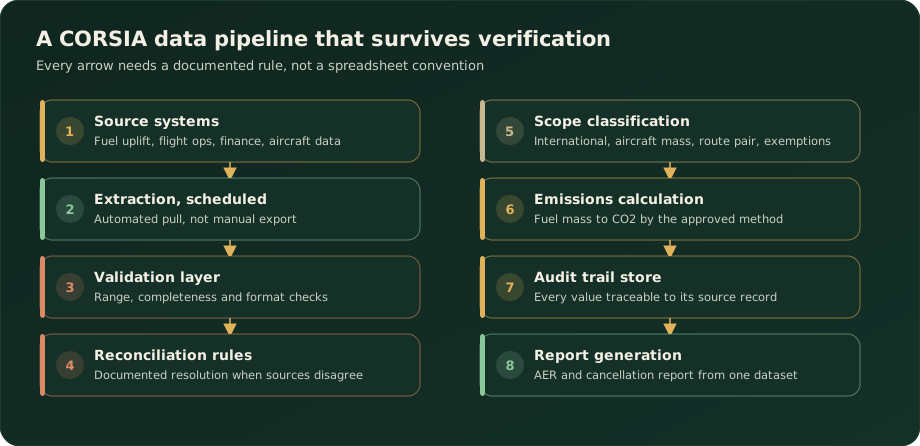
What happens. Fuel sources disagree, as they always do, and each month someone decides how to resolve it.
The cost. Verification asks why this discrepancy was resolved this way, and "that is what we have always done" is not an answer. It is among the most common findings and it is entirely preventable.
The fix. Write six to ten reconciliation rules covering the discrepancy types you actually encounter, with an escalation threshold above which a person decides and records the reason.
7. Reconciling Annually Instead of Monthly
What happens. The pipeline runs once, in the reporting window.
The cost. An outstation whose dockets never reach the system is a nuisance in February and a permanent data gap in December. Problems are discovered when they cannot be fixed.
The fix. Run it monthly. Twelve routine exercises beat one reconstruction under deadline pressure, and the quality is better because nobody is rushing.
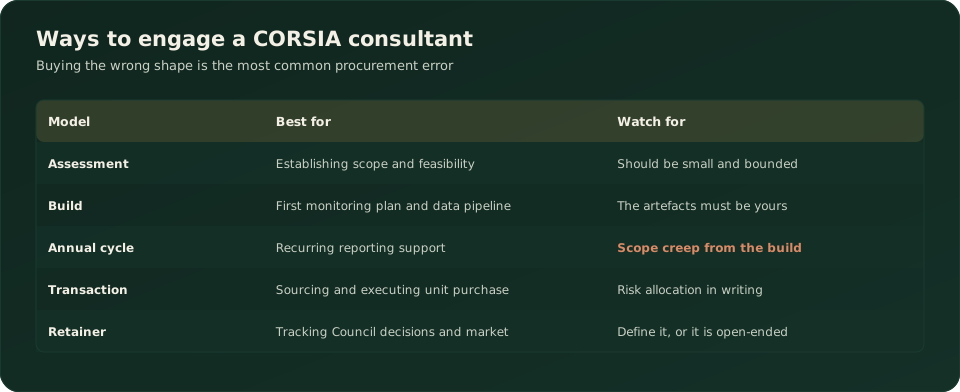
8. Expecting the Consultant to Verify
What happens. An operator engages one firm for the monitoring plan and assumes it will also verify.
The cost. Verification requires independence from anyone who advised. The discovery is usually made late, when verifier availability is already constrained.
The fix. Plan for two suppliers from the outset, and engage the verifier early — accredited bodies are limited and demand clusters in the same window for everyone.
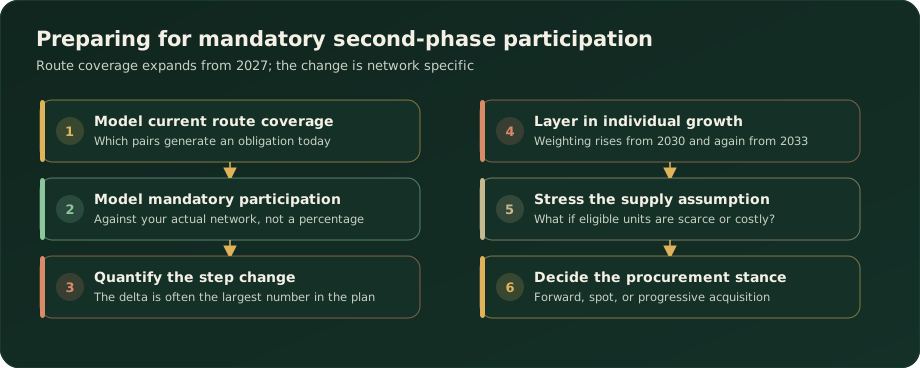
9. Ignoring the 2027 Step Change
What happens. The forecast extrapolates a trend through 2027.
The cost. Mandatory second-phase participation expands route coverage for States above the activity thresholds. For an operator with significant traffic to currently non-participating States, the increase can be large and it arrives on a known date.
The fix. Model covered emissions against your actual network under mandatory participation. The change is entirely network specific and a generic uplift will be wrong.
10. Claiming SAF Without the Paperwork
What happens. Qualifying fuel is uplifted and the reduction is budgeted, but the certification and chain-of-custody documentation is incomplete.
The cost. The claim is disallowed at verification and the obligation reverts to the unreduced figure — discovered after the budget was set on the reduced one.
The fix. Establish the certification scheme and chain-of-custody evidence path before contracting for the fuel, not after uplift.
Five More That Recur
11. Treating the participation list as static. States have joined and at least one has withdrawn. An operator who captured the list once and reuses it will misclassify route pairs. Capture it as at the date relied on, and re-check annually.
12. Linking to evidence rather than capturing it. A URL in a compliance file is not proof of what a page said during the reporting year. Programme approval status, participation lists and vintage windows all change. Save the page.
13. Keeping only the current monitoring plan version. Verification tests reporting against the plan in force during the period. If the plan was revised mid-year, both versions matter and you need the approval dates.
14. Assuming the fuel figure and the finance figure should match exactly. They will not, and a process built on the expectation that they should spends every month investigating normal variation. Write a tolerance and a rule instead.
15. Nobody able to explain the numbers except one person. The reconciliation logic lives in a head, the person moves on, and the organisation cannot answer for its own reported figures. This is the finding that turns a routine audit into a serious one, and documentation is the only fix.
Each of these shares the shape of the first ten: cheap to prevent, expensive at verification, and invisible until then.
The Pattern Behind Them
Most of these share a shape: a decision made on an assumption that was never tested, surfacing at verification when it cannot be corrected.
Three habits prevent most of them:
Test assumptions against real data before committing — method choice, threshold position, entity determination.
Write down the reasoning, not just the conclusion. Reconciliation rules, gap procedures, scope logic, purchase decisions.
Run things monthly rather than annually, so problems surface while they are fixable.
None of these are sophisticated. They are simply the difference between compliance that holds up and compliance that produces findings.
How These Get Found
Most of these mistakes are invisible internally until something external surfaces them. Three mechanisms find them earlier, in rough order of cost.
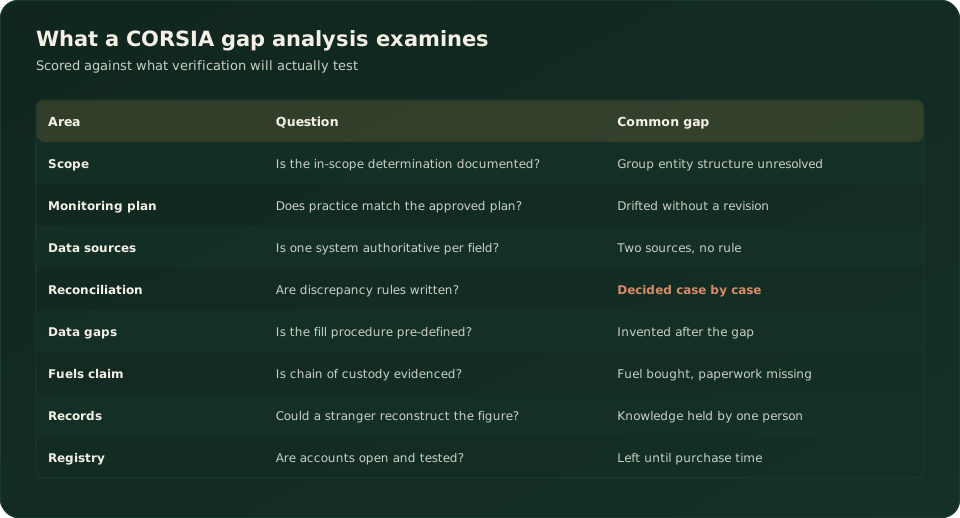
A gap analysis against what verification tests. Cheapest and earliest. It examines the eight areas that generate findings and reports where you stand, before any of it is expensive to correct.
An internal dry run. Sample twenty flights, chosen badly on purpose, and trace each figure to source in both directions. Hand five to someone uninvolved and ask them to explain the derivation from the files alone. Whatever they cannot explain is a finding you have found first.
The verifier. The most expensive discovery route, because by then the reporting year is closed and several of these mistakes cannot be corrected retrospectively.
The pattern worth noticing is that the first two cost days and the third costs a year. Operators who have been through one difficult verification generally adopt the first two permanently, which is an expensive way to learn something available cheaply.
A useful annual habit: before each reporting year begins, re-read the approved monitoring plan against what the team actually does. Drift accumulates quietly, and reading the document is free.
Frequently Asked Questions
Which mistake is most expensive? Choosing a monitoring method the data cannot support. The year cannot be redone.
How many of these apply to a small operator? Most. Scale changes the cost of each, not whether it occurs.
Which is most common? Undocumented reconciliation rules, followed closely by leaving registry accounts late.
Are these specific to India? Most are universal. The group-certificate, outstation-data and threshold-proximity ones arise more often in the Indian market because of how operations are commonly structured.
We think we have made one of these. What now? Establish the scope of the problem honestly, then engage your authority or verifier early rather than papering over it. Self-identified problems are handled far better than discovered ones.
Is a first-year finding serious? Findings in a first verification are normal. A repeat finding the following year is what damages credibility.
How do we know if we are making these mistakes? A gap analysis against what verification actually tests. See CORSIA gap analysis.
Do these apply to project developers too? Some do. The developer-side equivalents centre on assuming host-State authorisation and reconstructing documentation retrospectively.
What is the single best preventive habit? Monthly reconciliation with a written rule set. It catches most of the rest before they matter.
Planning your CORSIA position? DSTechnoverse provides CORSIA carbon credit services for Indian operators and project developers — scope and readiness assessment, monitoring plans, data pipelines, verification support, unit sourcing and second-phase modelling. We are based in Indore, Madhya Pradesh and work across India.
Apply as a CORSIA buyer or seller
Talk to our carbon markets team about your position.