An established carrier retrofitting CORSIA compliance is working against systems designed for other purposes, records kept to other standards and habits already formed. A new operator has none of those constraints.
That is a real advantage, and it is available only once.
The Position a New Operator Is In
Disadvantages:
- No historical data to test a monitoring method against
- No established reconciliation practice
- Emissions volume unknown until the network stabilises
- Competing priorities during launch, when CORSIA feels distant
- No internal expertise, and limited capacity to acquire it
Advantages, which are underrated:
- Systems can be specified to produce CORSIA-ready data from day one
- No legacy data quality problems to inherit
- Reconciliation rules can be designed rather than retrofitted
- Fuel data requirements can go into supplier and handling agreements before they are signed
- No habits to unlearn
The second list is worth more than it appears. Most of the expensive work in established-carrier CORSIA projects is fixing data that was never captured properly. A new operator can simply capture it properly.
Do It During System Selection
The highest-leverage moment is before the operations and fuel systems are chosen — and it passes quickly during a launch.
Specify at selection:
| Requirement | Why it matters later |
|---|---|
| Fuel uplift recorded per flight, not per day | Several monitoring methods depend on it |
| Departure and arrival aerodrome on every record | Scope classification by route pair |
| Aircraft registration and type per flight | Mass threshold and method applicability |
| Block times recorded systematically | Supports block-hour methods |
| Flight type classification field | Distinguishes exempt flights cleanly |
| Data exportable by API or scheduled extract | Avoids manual export every month |
| Records retained for at least ten years | Verification and audit reach back years |
Adding these to a system specification costs almost nothing. Adding them to a live system three years later is a project.
The same applies to handling and fuel supply agreements. A clause requiring uplift data in a defined format, per flight, delivered on a schedule, is easy to include when the contract is being negotiated and difficult to add afterwards.
Threshold Timing
A new operator will usually start below 10,000 tonnes of annual international CO2 and cross it as the network grows.
That transition needs planning rather than discovering.
Model when you expect to cross, from the fleet and network plan. A single narrowbody on international sectors will approach the threshold within a year or two of reasonable utilisation.
The monitoring plan must be approved before the year it covers. You cannot begin monitoring retrospectively once you notice you have crossed. This means the plan work happens in the year before the obligation, which is the timing detail most often missed.
Build the data capability early even if the obligation is later. The cost of capturing fuel data properly from launch is close to zero. The cost of reconstructing a year of it is not — and it cannot actually be done.
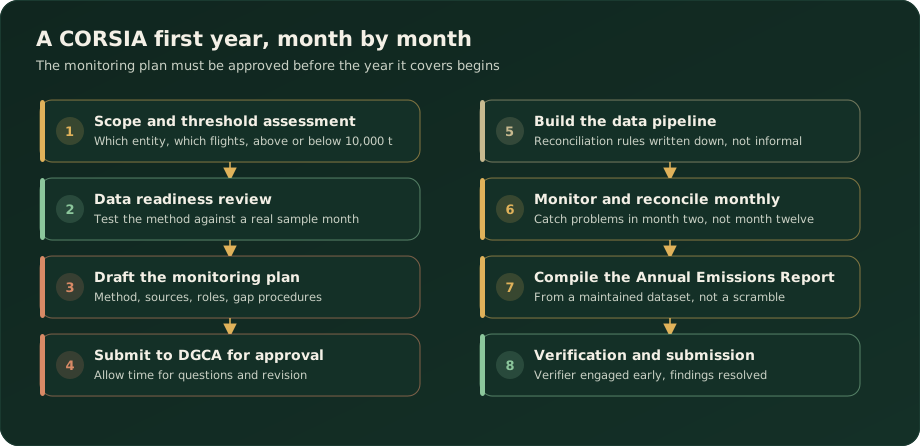
The First-Year Sequence
Working through the roadmap:
Scope and threshold assessment. Which legal entity holds the certificate, which flights are international, what the projected annual CO2 is.
Data readiness review. Take a real sample month once operating and test whether the intended monitoring method can be fed from actual records.
Draft the monitoring plan. Method, sources, roles, quality controls and gap procedures.
Submit to DGCA. Allow genuine time for questions and revision — approval is not instantaneous and a new operator has no track record with the authority.
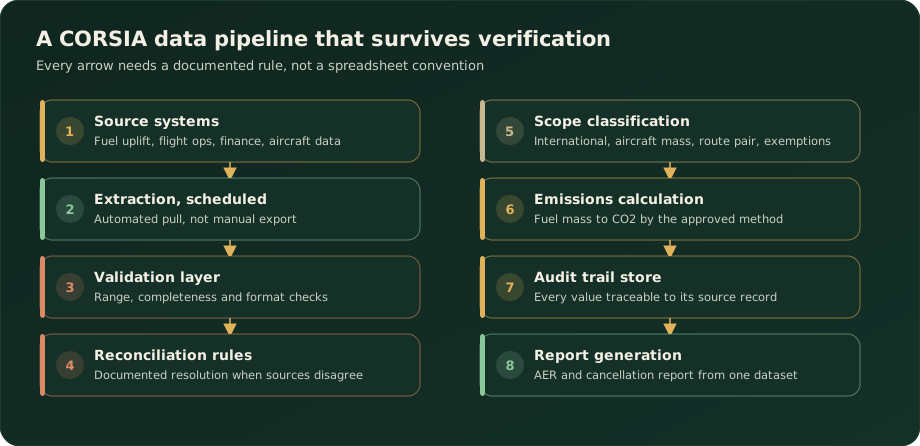
Build the pipeline. Automated extraction, documented reconciliation rules, an audit trail.
Monitor and reconcile monthly. For a new operation this is where problems surface, and month two is a much better time to find them than month twelve.
Compile and verify. From a maintained dataset rather than a year-end reconstruction.
Choosing a Method Without History
The awkwardness for a new operator is that method selection normally rests on testing against historical data that does not exist.
Two workable approaches:
Test on the first months of live operation. Delay the final method decision until a genuine sample exists, and use that period to test candidates. This requires the plan timeline to accommodate it.
Specify the systems to support the method you want. Rather than fitting a method to existing data, decide what you want to use and require the systems to produce it. This is the option only a new operator has.
The second is stronger where it is available. Most established carriers would choose differently if they could specify their systems again.
Budgeting for the Build
A new operator's CORSIA cost profile is front-loaded and then modest, which is worth stating plainly in a launch budget where every line is contested.
Year one is dominated by build, not units. The monitoring plan, the data pipeline and the first verification are the substantial items. A new operator's early offsetting obligation is usually small, because covered emissions are small and the growth factor applies to a small base.
The build is largely one-off. A pipeline specified correctly at launch needs maintenance, not rebuilding. This is the argument for spending properly on it once rather than repeatedly patching.
Verification is the recurring floor. It happens every year regardless of size, and it does not scale down much.
Unit cost grows with the network, and steps up in 2027 and again from 2030. Model it against the fleet plan rather than extrapolating year one.
The framing that works in a launch budget: a modest one-off build now avoids a much larger retrofit later, and the retrofit option is not fully available because the data cannot be recreated.
Governance From the Start
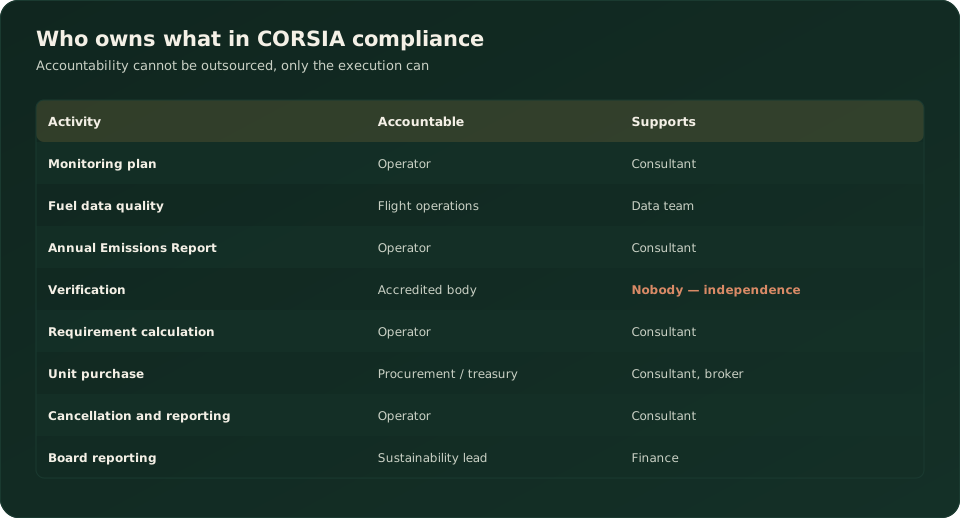
Assign ownership before the first reporting year, not during it.
The pattern that fails in new operators is CORSIA sitting with whoever has capacity that week. It needs a named owner with the authority to require data from flight operations and finance, and a defined escalation route when it does not arrive.
For a small launch team this may be a part of someone's role rather than a dedicated post. That is fine, provided it is written down and the authority is real.
Fleet and Network Decisions Carry a CORSIA Cost
For a growing operator the connection between commercial planning and CORSIA exposure is direct, and it is worth surfacing while the decisions are still open.
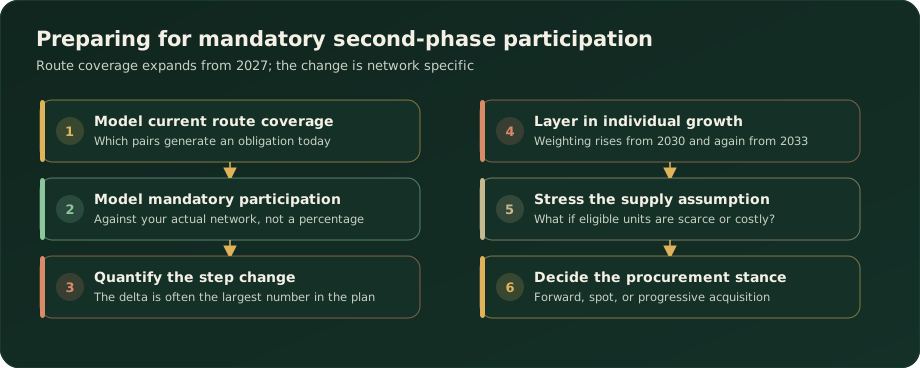
Route choice determines coverage. An international route between two participating States generates an offsetting obligation from day one. The same aircraft flying to a non-participating State does not, today — but may from 2027 when participation becomes mandatory for States above the activity thresholds. Two network plans with identical block hours can carry very different obligations.
Growth rate matters from 2030. The individual growth factor enters the calculation at 15% weight from 2030 and 30% from 2033. A carrier expanding faster than the global sector carries proportionally more of its own burden. For a new airline, which is by definition growing fast from a small base, this is not a marginal effect.
Fleet choice affects fuel burn and therefore the base. Obligation is a percentage of covered emissions, so anything reducing fuel burn reduces the obligation proportionally.
SAF availability varies by station. Where qualifying fuel can be uplifted with proper certification, it reduces the requirement directly. Station selection can therefore affect how easily that lever is available.
None of this should drive network strategy on its own. It should be visible in the model rather than arriving later as an unexplained cost line. A fleet plan with a CORSIA column is a better fleet plan.
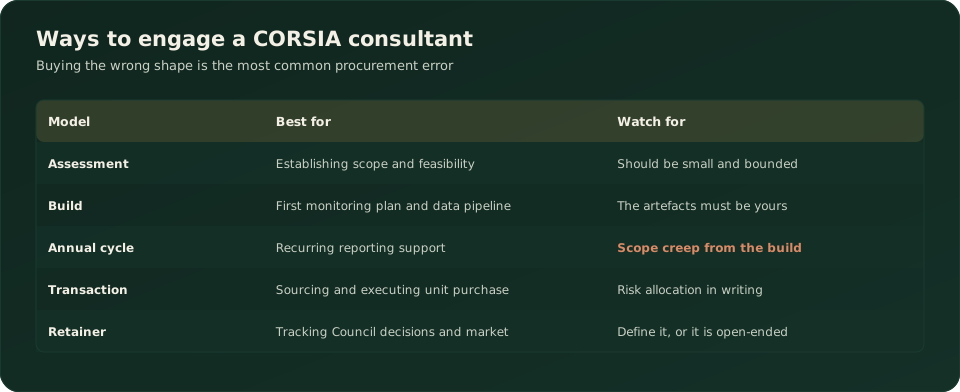
Where a Consultant Helps
System specification input, before selection. The highest-return intervention available and the one with the shortest window.
Threshold and timing modelling, so the plan work happens in the right year.
First monitoring plan and DGCA engagement, where a new operator has no established relationship with the authority.
Pipeline design, so the reconciliation rules are documented from the start.
What to keep internal: ownership, and understanding of your own data. A launch team that outsources understanding will struggle at the first verification.
Frequently Asked Questions
When does a new airline need to worry about CORSIA? Before crossing the threshold, because the monitoring plan must be approved before the year it covers. Model the crossing from the network plan.
Do we need a monitoring plan if we are below the threshold? Offsetting does not apply, but reporting obligations may depending on national implementation. Confirm with DGCA.
Can we start monitoring retrospectively? No. Data cannot be collected for a period that has passed, which is why the plan precedes the year.
What is the single most valuable thing to do at launch? Specify per-flight fuel capture and route data in your operations system and handling contracts. It costs nothing then and cannot be added cheaply later.
How long does DGCA approval take? Allow generous time, particularly as a new operator without a track record. Engage early rather than close to the deadline.
Should we hire or outsource? Outsource the first build; keep ownership and data understanding internal. See consultant versus in-house.
Should CORSIA influence our route launch decisions? It should be visible in the model rather than driving it. Two networks with identical block hours can carry materially different obligations depending on participation status at each destination.
How much does the first year cost? Dominated by the monitoring plan, the data build and the first verification, not by units — a new operator's early obligation is usually small. The build cost is largely one-off.
What about the second phase? Model it now — a growing network is disproportionately exposed to the 2027 coverage expansion. See second-phase readiness.
Working out what CORSIA means for your operation? DSTechnoverse provides CORSIA carbon credit services for Indian operators and project developers — scope assessment, monitoring plans, data pipelines, verification support and unit sourcing. We are based in Indore, Madhya Pradesh and work across India.
Apply as a CORSIA buyer or seller
Talk to our carbon markets team about your position.