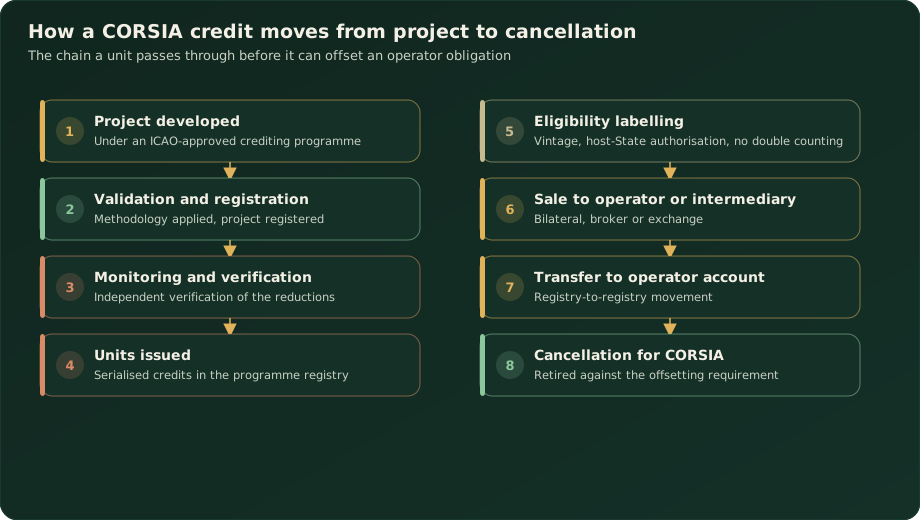
The purchase itself is the easy part. What surrounds it — establishing what you need, opening the accounts, verifying what you are buying, and completing the cancellation and reporting — is where the time and the risk sit.
Here is the sequence, in order, with what actually goes wrong at each stage.
Step 1: Model Your Requirement
What: Establish how many tonnes you need to offset for the compliance period.
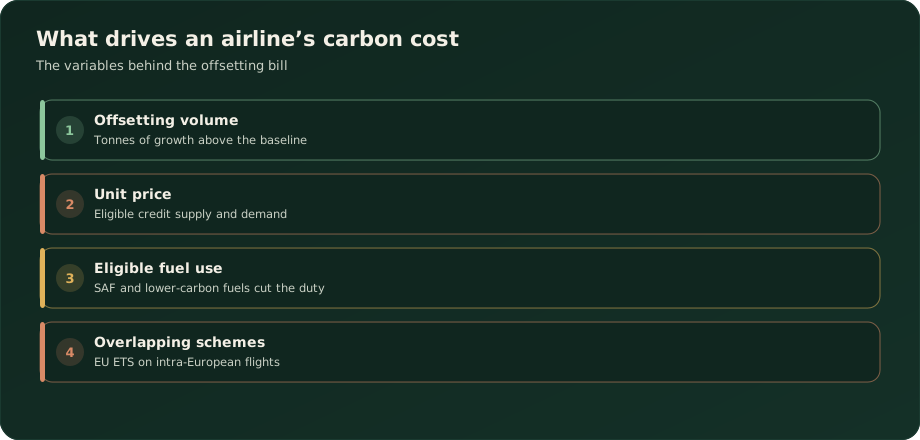
Your obligation derives from verified emissions on covered routes, multiplied by the applicable growth factors, less any reduction from qualifying CORSIA Eligible Fuels.
When: Annually, not once per period. Estimate using published sector data, then refine when ICAO confirms the factors.
What goes wrong: Operators wait to be handed a final number. By the time it is confirmed, the window to spread purchasing has closed. See requirement calculation for the mechanics.
Output: A working requirement figure with a documented, reproducible calculation.
Step 2: Set a Procurement Strategy
What: Decide how much to buy forward versus spot, over what timeframe, and with what diversification.
Key decisions:
- Timing. Progressive acquisition across the period versus a single purchase near the deadline. Progressive reduces exposure to end-of-period scarcity.
- Forward versus spot. Forwards secure supply and price but carry delivery and authorisation risk. Spot preserves flexibility but competes in a thin market.
- Diversification. Across programmes, project types, host States and vintages.
- Risk appetite. Whether you will consider supply where authorisation is pending, and at what discount.
What goes wrong: No strategy at all, and procurement is handled reactively by whoever happens to receive an approach from a broker.
Output: A written strategy with volume targets by period.
Step 3: Open Registry Accounts
What: Establish accounts in the registries of the ICAO-approved programmes whose supply you expect to buy.
When: Well ahead of any transaction.
What goes wrong: Underestimating the timeline. Account opening involves know-your-customer verification, entity documentation and sometimes legal review. Weeks, not days. Operators who agree a purchase first find their own onboarding blocking delivery.
Output: Live accounts, with a test transfer completed if the registry permits.
Step 4: Identify Supply
What: Find units that plausibly meet the eligibility criteria.
Routes to supply: direct from developers, via brokers and intermediaries, via programme or platform matching mechanisms, or through forward agreements with projects in development.
What goes wrong: Taking the description at face value. Language such as "CORSIA-ready", "CORSIA-aligned" and "eligible pending authorisation" describes units that are not currently eligible. Screen for that language early so you do not spend diligence effort on supply that cannot work.
Output: A shortlist of candidate supply, with the seller, programme, project, vintage and volume for each.
Step 5: Due Diligence
What: Verify eligibility against evidence, not description.
The core checks:
- Programme approval. Currently approved by the ICAO Council? Full or conditional? Verify against the ICAO emissions units page at the time of transaction, not from a saved list.
- Vintage. Inside the eligible window for your compliance period?
- Corresponding adjustment. A host-State authorisation document naming these units, from the designated national authority, plus evidence of the adjustment in national reporting.
- Verification. An accredited body's report, with any qualifications examined.
- Registry record. Unique serialisation, clean chain of custody, no prior retirement.
- Project integrity. Additionality, permanence arrangements, no net harm evidence.
What goes wrong: Accepting a seller's assurance in place of documents. Verify independently, from the registry and the authorisation document.
Output: A diligence file per tranche, retained for audit.
Step 6: Negotiate and Contract
What: Agree price and terms.
Terms that matter more than price:
- Eligibility warranty. What the seller warrants, and the remedy if a unit proves ineligible.
- Delivery. Timing, and what happens on late delivery relative to your cancellation deadline.
- Authorisation risk. For forward deals, who bears the loss if the host State does not authorise.
- Vintage protection. What happens if the eligible window shifts.
- Documentation. An obligation to provide the full evidence package, not a certificate.
- Payment. Escrow or staged payment against delivery and documentation.
What goes wrong: A purchase order with a price and a volume and nothing else. When something fails, the loss lands on the buyer by default.
Output: An executed agreement with risk explicitly allocated.
Step 7: Payment and Transfer
What: Complete payment and take delivery into your registry account.
Practical points: Cross-border payment raises treasury and foreign exchange considerations that are worth resolving before the transaction rather than during. Registry transfers are not instantaneous, and inter-registry transfers can take longer than intra-registry ones.
What goes wrong: Paying in full before transfer, against a counterparty you have not previously dealt with.
Output: Units in your account, serial numbers recorded.
Step 8: Cancel
What: Cancel the units in the registry, specifying CORSIA as the purpose.
This is the act that discharges the obligation. Holding units achieves nothing.
What goes wrong: Two things. Leaving cancellation to the last day, when registry processing time is not within your control. And cancelling without recording the serial numbers and cancellation references in your own compliance file.
Output: Cancellation confirmations with serials and references.
Step 9: Report the Cancellation
What: Submit the Emissions Unit Cancellation Report to your national authority — the DGCA for Indian operators.
What goes wrong: Treating cancellation as the end. The report is what closes the loop for the authority.
Output: An accepted report.
Step 10: Retain the Evidence
What: Keep the complete package — contract, diligence file, authorisation documents, verification reports, registry records, transfer confirmations, cancellation confirmations and the report.
What goes wrong: Staff turnover, system migration, and a verifier three years later asking a question nobody remaining can answer.
Output: A durable, indexed record.
Working With Intermediaries
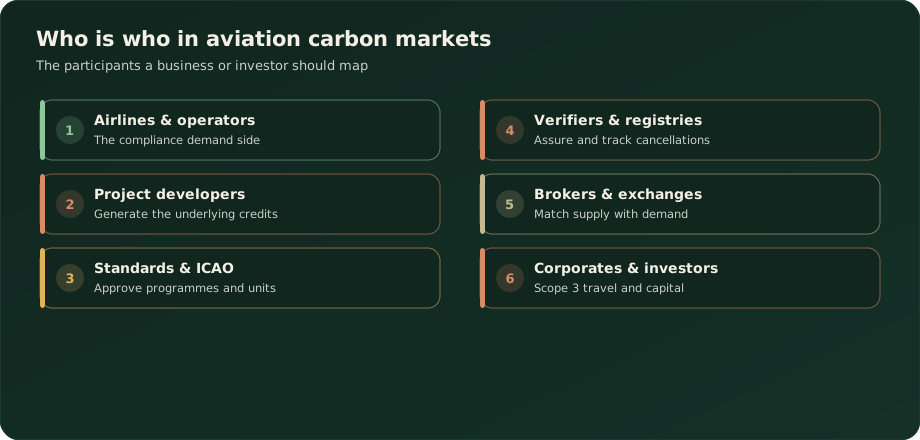
Most first-time buyers reach supply through an intermediary rather than direct, and the relationship is worth setting up deliberately.
Establish what they actually are. A broker introducing buyer to seller has different obligations and different incentives from a trader selling units from their own book. Ask which they are, and how they are paid. A commission on volume and a margin on a proprietary position pull in different directions.
Ask what they verify. Some intermediaries conduct genuine diligence and will show you their work. Others pass through the seller's description. Both are legitimate businesses, but you need to know which one you are dealing with so you can size your own effort accordingly.
Test their understanding early. A single question does it: how do they establish that a unit carries a corresponding adjustment? An intermediary who answers with a specific evidence chain — designated national authority, authorisation document, unit identifiers, national reporting — understands the market. One who answers "the project confirms it" does not.
Do not let them hold your diligence file. You need the evidence in your own records, in a form that survives the relationship ending.
Understand the delivery chain. If the intermediary does not hold the units, delivery depends on a counterparty you have not assessed. Ask who actually holds them and whether you can verify that holding in the registry.
None of this argues against using intermediaries. In a market with no exchange and no public price, they are how supply gets found. It argues for treating them as a supplier to be assessed rather than as an extension of your own team.
A Realistic Timeline
For a first purchase, working backwards from a cancellation deadline:
- Registry account opening: allow four to eight weeks
- Supply identification: two to six weeks
- Due diligence per tranche: one to three weeks
- Contract negotiation: two to six weeks
- Payment and transfer: one to three weeks
- Cancellation and reporting: one to two weeks
That is roughly three to six months for a first cycle, and it assumes nothing goes wrong. Subsequent cycles compress considerably once accounts and processes exist, but the diligence step does not compress much, because it is evidence gathering rather than administration.
Frequently Asked Questions
Can I buy through an exchange? The CORSIA-eligible segment is largely bilateral. Platforms exist for discovery, but the diligence obligation stays with you.
Do I need a registry account for every programme? Only for those where your supply sits. Consolidating into fewer programmes simplifies administration but concentrates programme approval risk.
What if the seller will not provide the authorisation document? Do not proceed. There is no substitute for it and no reason for a legitimate seller to withhold it.
Can I cancel units held by a broker on my behalf? Practice varies by registry, but a cancellation reported for your compliance should be traceable to you. Confirm the mechanism with your authority before relying on it.
How long before the deadline should I complete? Weeks, not days. Registry and authority processing times are outside your control.
What if I need more units after cancelling? You buy more, in whatever market conditions then exist. This is precisely the exposure that accurate requirement modelling avoids.
Buying CORSIA credits? DSTechnoverse provides specialist CORSIA carbon credit services — offsetting requirement calculation, eligible unit sourcing, pre-transaction due diligence, registry execution and cancellation reporting. We are based in Indore, Madhya Pradesh and work with operators across India and internationally.
Apply as a CORSIA buyer or seller
Talk to our carbon markets team about your requirement.