For an airline, CORSIA is not an abstract policy — it is an annual operational task with deadlines, auditors and a bill at the end. Once you see it as a recurring cycle rather than a one-off rule, the mechanics become clear. Here is how a covered operator actually runs it.
The Cycle, Not the Rule
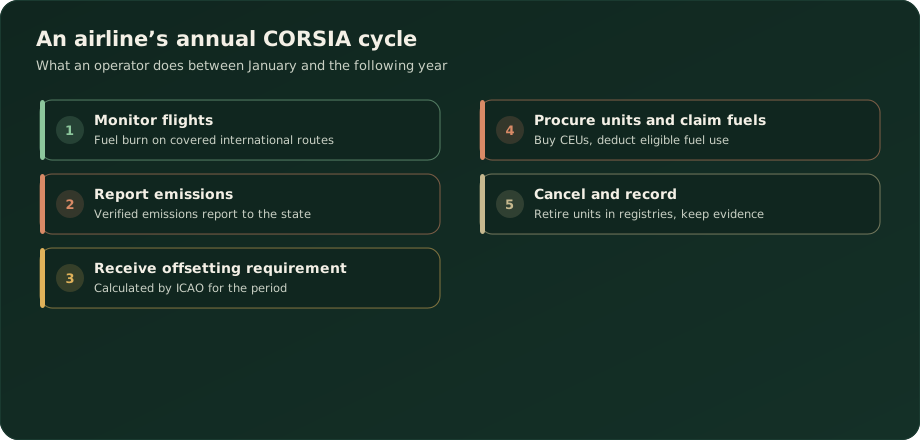
CORSIA repeats every year on the same rhythm: monitor, report, verify, receive an obligation, procure, cancel, record. Miss a step and the whole chain breaks — a beautifully bought portfolio of credits is useless if the underlying emissions report was never verified on time.
Step one — monitor the right flights
The operator tracks fuel burn on its covered international routes throughout the year, using a fuel-monitoring method agreed in advance in its emissions monitoring plan. Precision here matters because every downstream number derives from it. (The full monitoring and verification side is covered in CORSIA compliance requirements.)
Step two — report and verify
After year-end, the airline compiles an emissions report and has it checked by an accredited verification body. Only verified emissions feed into the offsetting calculation. The verified report goes to the operator's state, which aggregates and passes data to ICAO.
Step three — receive the offsetting requirement
The airline does not invent its own number. ICAO's methodology converts sector and operator growth into an offsetting requirement for the compliance period, published on a defined schedule. The operator then knows how many tonnes it must cover.
Step four — procure eligible units
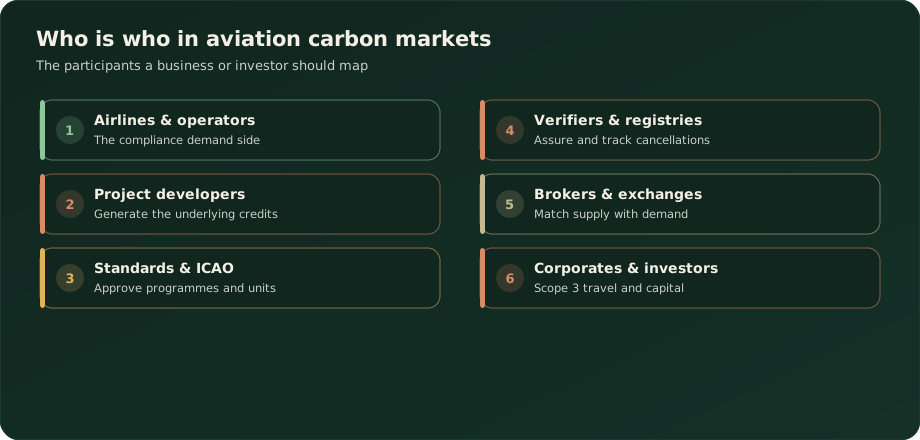
Now the market comes in. The airline buys CORSIA Eligible Emissions Units from approved crediting programmes, usually through brokers, exchanges or direct deals with project developers. It must buy units that are eligible for the specific phase — which, from 2024, means units carrying a corresponding adjustment.
Step five — cancel and record
Buying is not enough. The airline must cancel (retire) the units in the relevant registry so they can never be resold or reused, then keep the cancellation records as evidence. A credit that sits un-cancelled in an account has not discharged any obligation.
Lowering the Bill With Sustainable Fuel
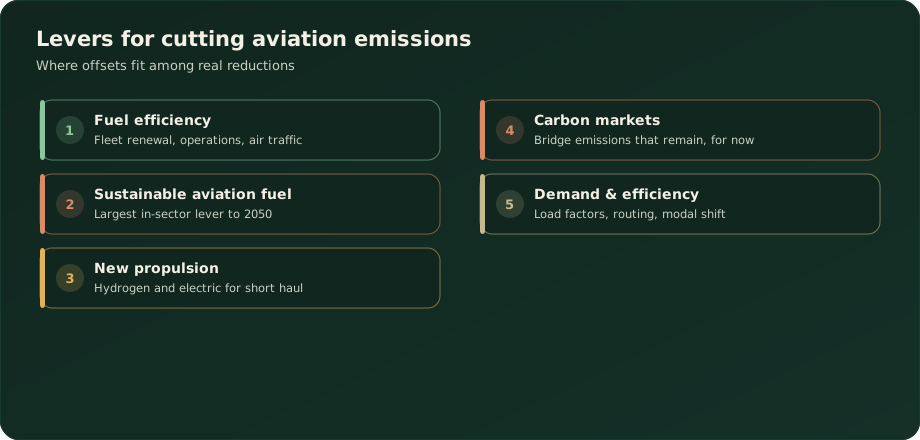
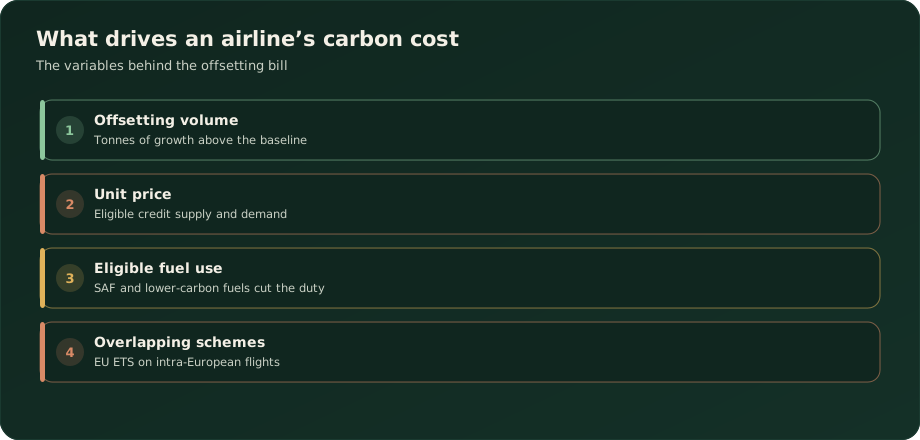
Credits are one route; fuel is the other. When an airline uses CORSIA Eligible Fuels — principally sustainable aviation fuel (SAF) meeting the scheme's sustainability criteria — the associated emissions reductions lower its offsetting requirement directly. In practice, larger carriers pursue a blend: SAF where it is available and affordable, eligible units for the remainder. As SAF supply grows, the credit share of compliance is expected to shrink.
A Worked Example
Take an airline with a 200,000-tonne offsetting requirement for a period.
- It used SAF that qualifies for a reduction equivalent to 30,000 tonnes.
- Its net requirement falls to 170,000 tonnes.
- It procures 170,000 eligible units across two approved programmes.
- It cancels all 170,000 in the registries and files the certificates with its compliance evidence.
The arithmetic is simple; the discipline is in doing each step on time and being able to prove it.
Where Operators Slip Up
Three mistakes recur.
Buying ineligible units. A credit that is genuine and cheap but lacks a corresponding adjustment or comes from a non-approved programme cannot be used. Eligibility must be checked before purchase, not after.
Leaving units un-cancelled. Procurement is confused with compliance. Until the unit is retired in the registry, nothing has been discharged.
Weak monitoring evidence. If fuel-burn data cannot survive verification, the emissions figure is challenged and the whole timeline slips. Good data discipline during the year prevents a scramble after it.
Why the Order Matters
Notice that the market step sits near the end. An airline cannot sensibly buy credits until it knows its verified emissions and its published offsetting requirement — buying earlier is speculation, not compliance. The credits are the settlement of a number that the monitoring and verification process produces first.
Frequently Asked Questions
Do airlines buy credits every year? They procure and cancel units for each compliance period, on the schedule ICAO sets. Some buy ahead to manage price risk, but the obligation is periodic.
Can an airline meet CORSIA entirely with SAF? In principle eligible fuels can reduce the requirement substantially, but SAF supply and cost mean most operators still use units for the balance.
What does "cancelling" a credit mean? Permanently retiring it in a registry so it cannot be transferred or used again. This is the act that actually meets the obligation.
Who checks the airline's emissions? An accredited third-party verification body, before the report goes to the operator's national authority and on to ICAO.
What happens if an airline does not comply? Enforcement sits with the operator's state, which implements CORSIA in national law; penalties and consequences are set at that level.
Working on aviation emissions, CORSIA compliance or carbon credit due diligence? DSTechnoverse handles the data side of carbon and environmental compliance — monitoring design, emissions reconciliation, verification support and defensible reporting. See our CORSIA carbon credit services and data analytics. We are based in Indore, Madhya Pradesh and work across India and internationally.
Apply as a CORSIA buyer or seller
Talk to our team, or start with the complete carbon credits guide.