As buyers shift from avoidance credits toward genuine removals, one option keeps rising up the shortlist: biochar. It sits in a sweet spot — more durable than a forest, far cheaper than direct air capture, and available at scale today. Here is how biochar carbon credits work and why they are in demand.
What Biochar Actually Is
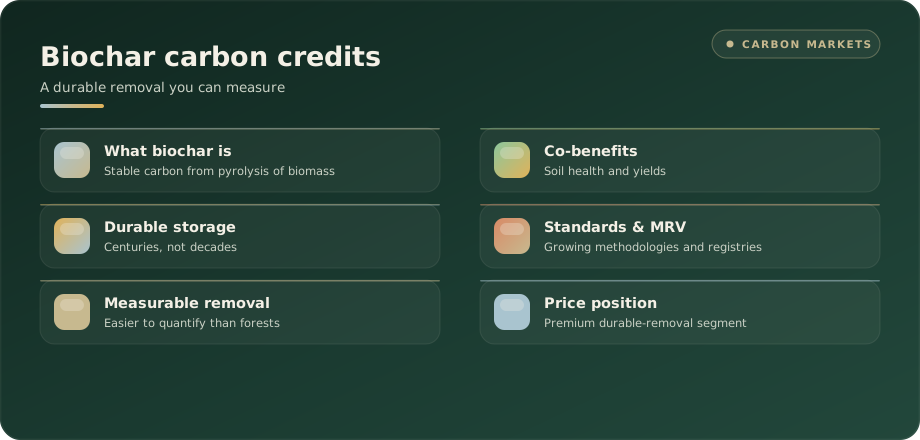
Biochar is a stable, charcoal-like solid made by heating biomass — crop residues, forestry waste, other organic matter — in a low-oxygen process called pyrolysis. Left to decompose, that biomass would release its carbon back to the atmosphere within a few years. Converted to biochar, the carbon is locked into a form that resists breakdown for a very long time. A biochar credit represents that avoided return of carbon to the air, stored durably.
Why Durability Is the Headline
The defining question for any removal is permanence — how long the carbon stays out of the atmosphere. This is where biochar shines:
| Removal type | Typical durability | Relative cost |
|---|---|---|
| Forestry (avoidance/ARR) | Decades, reversible | Low–mid |
| Biochar | Centuries | Mid |
| Direct air capture + storage | Millennia | High |
A forest can burn; biochar, once in the ground or in a durable use, does not simply reverse. That century-scale durability is why biochar is treated as a serious removal rather than a temporary store — and why it commands a premium over avoidance credits.
The Co-Benefits Buyers Like
Biochar is unusual in that the removal often comes with a productive use. Applied to soil, it can improve water retention, reduce the need for fertiliser, and lift yields — so the same tonne of stored carbon also delivers agricultural benefit. These co-benefits strengthen the development story behind the credit and make biochar attractive to buyers who want more than a number.
Integrity and MRV
Biochar's integrity case is comparatively strong because the removal is measurable. Unlike below-ground forest carbon, the quantity of carbon in a batch of biochar can be characterised in the lab, and the process is a discrete, verifiable industrial step. Methodologies and registries for biochar have matured quickly, and third-party verification follows the same logic as any credit. The main diligence questions are the feedstock's sustainability, the durability of the end use, and — as always — conservative quantification. For the wider quality framework, see how to evaluate carbon offset quality.
Where Biochar Sits in a Portfolio
For a buyer building a credible removal portfolio, biochar is often the workhorse: durable enough to count as a real removal, measurable enough to defend, and affordable enough to buy at volume — a practical middle ground between cheap-but-reversible forestry and expensive-but-permanent direct air capture.
Frequently Asked Questions
What are biochar carbon credits? Credits representing carbon durably stored as biochar — a stable solid made by heating biomass — which would otherwise have decomposed and released its carbon.
How long does biochar store carbon? Typically centuries, making it far more durable than forestry and one of the more permanent removals available at scale today.
Are biochar credits removals or avoidance? Removals — they represent carbon taken out of the natural cycle and stored durably, not an avoided future emission.
What are the co-benefits of biochar? Applied to soil it can improve water retention, reduce fertiliser needs and increase yields, adding agricultural value to the carbon removal.
Why are biochar credits considered high integrity? The stored carbon is measurable, the process is a discrete verifiable step, and durability is high — though feedstock sustainability and conservative quantification still matter.
Navigating carbon credits and climate claims? DSTechnoverse works on the data and integrity side of carbon — project screening, registry and eligibility verification, MRV and monitoring-data analysis, reconciliation and defensible reporting. See our CORSIA carbon credit services and data analytics. We are based in Indore, Madhya Pradesh and work across India and internationally.
Apply as a carbon credit buyer or seller
Talk to our team, or start with the complete carbon credits guide.