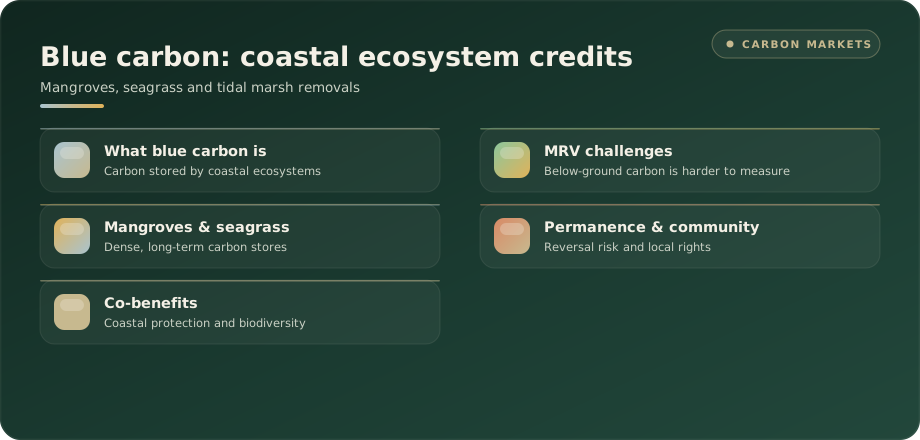
Some of the most powerful carbon sinks on the planet are not forests at all — they are the muddy, tidal edges where land meets sea. Blue carbon refers to the carbon captured and stored by coastal ecosystems: mangroves, seagrass meadows and tidal salt marshes. Credits from protecting and restoring them are a fast-growing and distinctive corner of the market.
Why Coastal Ecosystems Punch Above Their Weight
Mangroves and seagrass store carbon at rates that can exceed tropical rainforest, and — crucially — they lock much of it into waterlogged soils where it can remain for centuries or millennia, because the lack of oxygen slows decomposition. A relatively small area of healthy mangrove can therefore hold a large, durable carbon stock. That density is what makes blue carbon attractive: high storage per hectare, with real permanence in the sediment.
The Co-Benefits Are Exceptional
Even by the standards of nature-based solutions, blue carbon's co-benefits stand out:
- Coastal protection — mangroves buffer storms, surge and erosion, protecting communities and infrastructure.
- Biodiversity — these ecosystems are nurseries for fisheries and habitat for countless species.
- Livelihoods — coastal communities depend on them for fishing and protection.
For buyers who want credits with a story beyond the tonne, blue carbon is among the most compelling — which is why it often commands a premium within the nature-based segment.
The Measurement Challenge
Blue carbon's strength — carbon locked in waterlogged soil — is also its hardest MRV problem. Much of the carbon is below ground, in sediment, which is far more difficult to measure than the visible biomass of a forest. Quantifying the stock, and the emissions avoided or removed by protecting or restoring it, demands careful sampling and conservative modelling. This is exactly the kind of below-ground measurement complexity that separates credible blue-carbon projects from optimistic ones, echoing the MRV theme in ARR removals.
Permanence and Community Rights
Two further diligence questions define a good blue-carbon credit. Permanence must account for the specific risks these ecosystems face — sea-level rise, coastal development, aquaculture conversion — with monitoring and buffers sized accordingly. And because blue carbon sits where people live and fish, community rights and benefit-sharing are not a footnote; a project that protects carbon while harming local livelihoods is neither just nor durable.
Where Blue Carbon Fits
Blue carbon is a high-co-benefit, nature-based option that suits buyers wanting durable coastal removals with strong development and biodiversity value — provided the below-ground measurement and community safeguards are handled rigorously. Like all nature-based credits, quality varies project to project, so the general offset-quality checks apply.
Frequently Asked Questions
What is blue carbon? Carbon captured and stored by coastal ecosystems — mangroves, seagrass meadows and tidal marshes — much of it locked durably in waterlogged soils.
Why are mangroves good for carbon? They store carbon at high rates and trap much of it in oxygen-poor sediment, where it can remain for centuries, plus they protect coasts and biodiversity.
What are the main challenges with blue carbon credits? Measuring below-ground soil carbon is difficult, and permanence and community-rights risks must be managed carefully.
Are blue carbon credits removals? They can represent both avoided emissions (from protecting ecosystems) and removals (from restoration), depending on the project.
Why do blue carbon credits often cost more? Their exceptional co-benefits — coastal protection, biodiversity and livelihoods — and durable storage tend to command a premium within nature-based credits.
Navigating carbon credits and climate claims? DSTechnoverse works on the data and integrity side of carbon — project screening, registry and eligibility verification, MRV and monitoring-data analysis, reconciliation and defensible reporting. See our CORSIA carbon credit services and data analytics. We are based in Indore, Madhya Pradesh and work across India and internationally.
Apply as a carbon credit buyer or seller
Talk to our team, or start with the complete carbon credits guide.