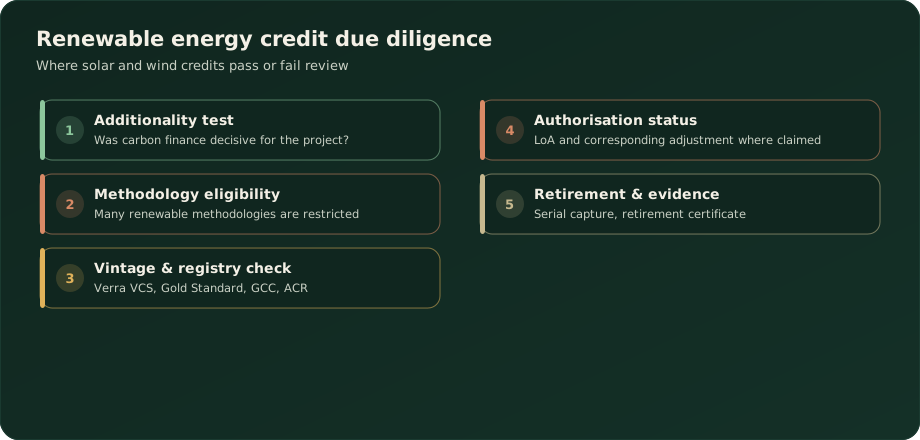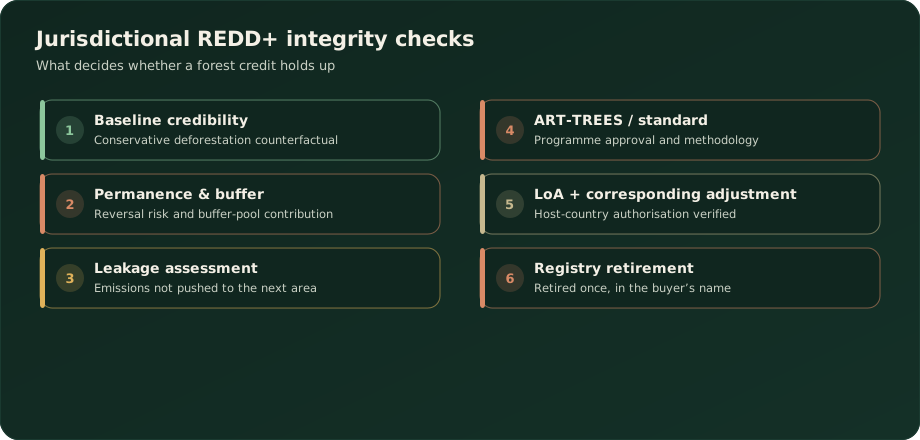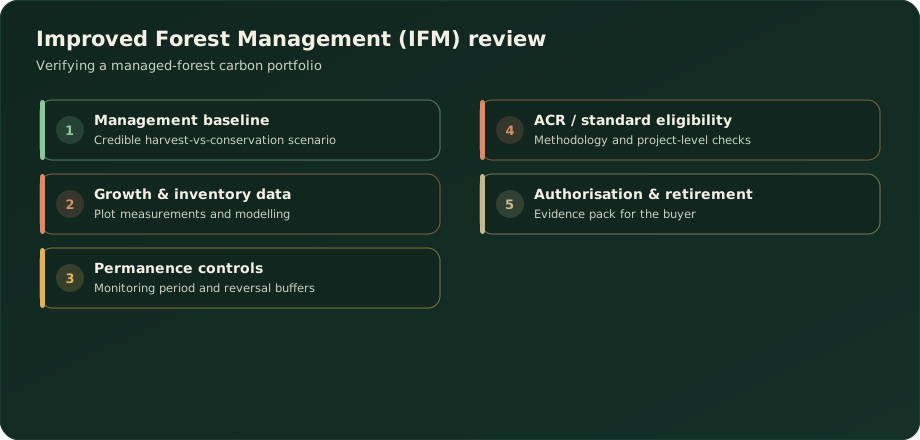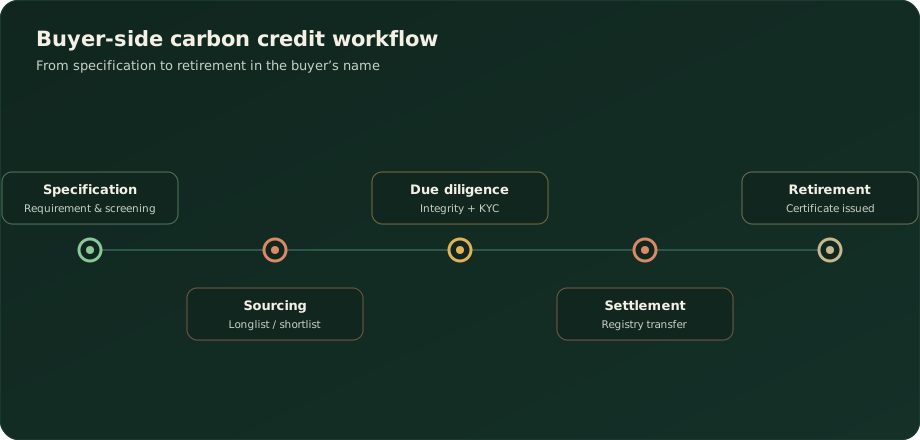
The individual project types — renewable, REDD+, IFM, ARR and clean cooking — each have their own integrity questions. But every purchase runs through the same buyer-side workflow. This representative case study steps through that workflow end to end, on the data and diligence side, so a first-time buyer can see how a credible carbon purchase actually happens.
Why a Workflow, Not a Purchase
Buyers who treat carbon credits like a commodity purchase — pick a price, pay, done — are the ones who end up holding units they cannot use or cannot defend. A credible purchase is a sequence, and each step gates the next. Skipping the early steps to save time simply moves the cost to the end, when a weak credit fails an audit.
The Workflow
1. Requirement definition and screening
Everything starts with a clear specification: what the credits are for (a voluntary claim, a compliance obligation, an ESG report), which project types and standards are acceptable, and — just as important — an exclusion register of what the buyer will not touch. Setting negative screens up front, rather than reacting to offers, is what keeps a procurement disciplined.
2. Sourcing and shortlisting
With the specification fixed, candidate sellers and projects are gathered into a longlist and narrowed to a shortlist, with an offer-comparison view that puts type, standard, vintage and delivery on the same page. Price is one column among several, deliberately not the first.
3. Due diligence — the core
This is where the real work sits, and it has two halves.
Credit integrity. The project is scored on the checks that matter for its type — additionality, baseline, permanence, leakage, methodology-level eligibility — and each unit is verified against the registry of record for issuance, vintage and live, un-retired serial numbers.
Counterparty. In parallel, KYC and sanctions screening on the seller and, where relevant, third-party credit checks. A clean credit from a compromised counterparty is not a clean deal.
Where the buyer's use requires it, the Letter of Authorisation and corresponding adjustment status is verified against the published source — never accepted on the seller's assertion.
4. Documentation and settlement
The commercial and technical terms are captured in the sale agreement or ERPA, with a conditions-precedent list that makes settlement contingent on the diligence outcomes. On settlement, the credits move by registry transfer, and every serial number is captured.
5. Retirement and evidence
The final act is not receiving the credits — it is retiring them. Until a unit is cancelled in the registry in the buyer's name, no claim has actually been discharged. The engagement closes with a retirement certificate and an evidence pack that an auditor or a verifier can rely on.
The Outcome
Run in this order, the process does something quietly valuable: it fails cheaply. Weak projects drop out at screening and diligence, before any money moves, so the buyer only ever contracts units that will survive scrutiny — and ends with documentation that stands up long after the transaction.
Key Takeaways
| Stage | The gate it applies |
|---|---|
| Specification & screening | Defines what is acceptable and what is excluded |
| Sourcing | Compares offers on more than price |
| Due diligence | Integrity + KYC before any commitment |
| Settlement | Registry transfer, serials captured |
| Retirement | Cancelled in the buyer’s name; certificate issued |
Frequently Asked Questions
What is buyer-side carbon credit due diligence? The process of verifying a credit's integrity, eligibility and counterparty before purchase, and documenting it so the purchase can be defended.
Why is retirement so important? A credit only discharges a claim once it is cancelled (retired) in the registry in the buyer's name; holding it un-retired achieves nothing.
What is an ERPA? An Emission Reduction Purchase Agreement — the contract governing a carbon-credit sale, covering commercial terms, delivery and conditions.
What is KYC and sanctions screening? Checks on the seller's identity and sanctions status, so an integrity-clean credit is not undermined by a compromised counterparty.
Do you buy or sell the credits yourselves? No. We work on the specification, screening, due diligence, verification and reporting; the purchase sits directly between the buyer and the seller.
Evaluating carbon credits across standards and project types? DSTechnoverse works on the data and integrity side of carbon procurement — project screening, registry and eligibility verification, MRV and monitoring-data analysis, reconciliation and defensible reporting. See our CORSIA carbon credit services and data analytics. We are based in Indore, Madhya Pradesh and work across India and internationally.
Apply as a carbon credit buyer or seller
Talk to our team, or start with the complete carbon credits guide.
This is an anonymised, representative case study that illustrates our approach. It does not identify any specific client, project, price or transaction.