"CORSIA consultant" describes two entirely different jobs, and the first thing to establish before appointing anyone is which of them you actually need.
One side works for aircraft operators facing monitoring, reporting, verification and eventually offsetting obligations. The other works for project developers trying to supply credits that CORSIA will accept. The skills barely overlap, and a firm strong in one is frequently weak in the other.
What CORSIA Is, Briefly
CORSIA — the Carbon Offsetting and Reduction Scheme for International Aviation — is ICAO's global market-based measure for international flights. It has two limbs that are constantly confused:
Monitoring, reporting and verification (MRV). Aeroplane operators above the emissions threshold must monitor CO₂ from international flights, report annually, and have that report independently verified. This applies broadly, regardless of whether any offsetting duty arises.
Offsetting. Where both states on a route pair participate in the scheme, the operator must cancel eligible emissions units against the growth in emissions above the baseline for that traffic.
The MRV duty and the offsetting duty are separate tests. An Indian operator can have a full annual MRV obligation and no offsetting requirement on a given route pair, and the two positions change independently as states join. Getting this distinction wrong is the single most common error in first-time CORSIA planning — see what is CORSIA for the full picture.
The Two Consulting Practices
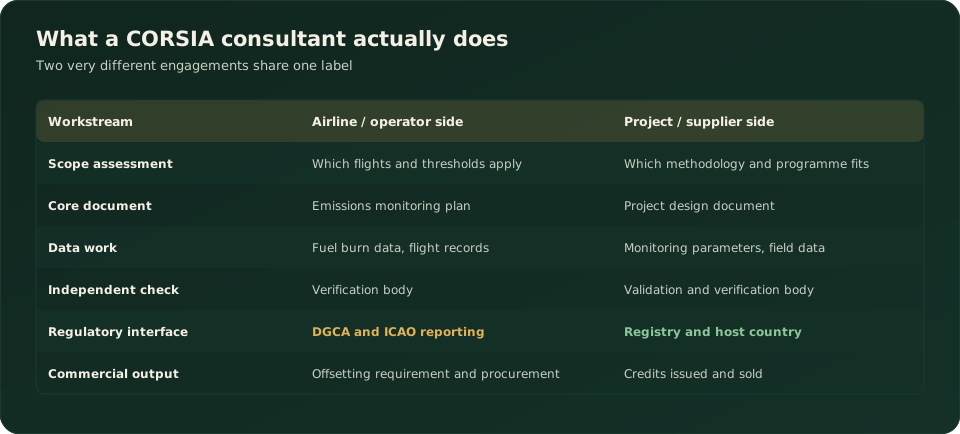
| Workstream | Airline / operator side | Project / supplier side |
|---|---|---|
| Scope assessment | Which flights and thresholds apply | Which methodology and programme fits |
| Core document | Emissions monitoring plan | Project design document |
| Data work | Fuel burn data, flight records | Monitoring parameters, field data |
| Independent check | Verification body | Validation and verification body |
| Regulatory interface | DGCA and ICAO reporting | Registry and host country |
| Commercial output | Offsetting requirement and procurement | Credits issued and sold |
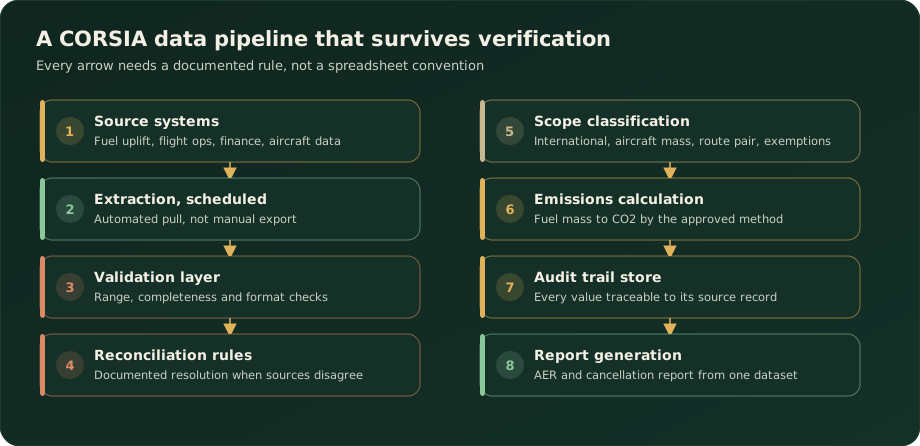
Operator-side consulting is fundamentally a data assurance discipline. The deliverable is a monitoring plan the authority accepts, a data flow that produces the same number every time, and an emissions report that survives verification without material findings.
Supplier-side consulting is a project development discipline. The deliverable is a project that registers under an ICAO-approved programme, generates verified reductions, and carries a corresponding adjustment — without which the credits cannot be used for CORSIA at all.
A third, narrower practice exists: buyer-side due diligence, checking that credits an airline is about to purchase are genuinely eligible. That work sits closer to the supplier side technically and closer to the operator side commercially.
What an Operator-Side Engagement Delivers
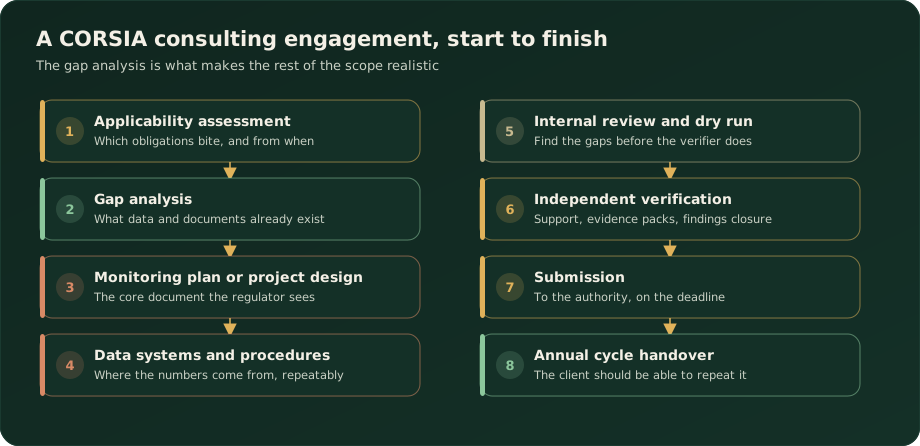
| Stage | Deliverable |
|---|---|
| Applicability assessment | A written determination of which obligations apply, and from when |
| Gap analysis | What data and documentation exist today versus what is required |
| Emissions monitoring plan | The document the authority accepts before reporting begins |
| Data systems and procedures | Defined sources, owners, controls and a data gap procedure |
| Internal review and dry run | Finding the problems before the verifier does |
| Verification support | Evidence packs, findings responses, closure |
| Submission | The verified report filed on the deadline |
| Knowledge transfer | Your team able to run the next cycle |
That last row is what separates a good engagement from an annuity. CORSIA MRV is an annual cycle, and a consultant who leaves behind documented procedures and a trained team should cost materially less in year two than in year one. If the proposed fee is flat for five years, ask why.
What It Costs
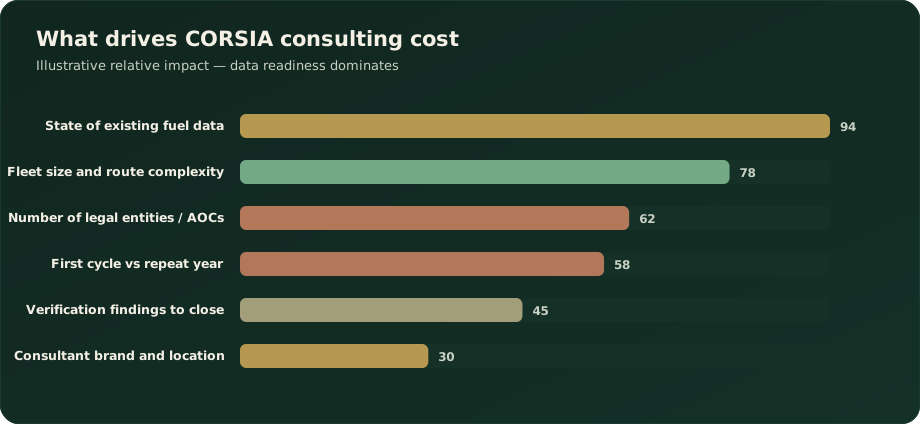
Cost is driven far more by the state of your data than by anything the consultant does:
| Driver | Effect on cost |
|---|---|
| State of existing fuel data | Dominant — clean data halves the work |
| Fleet size and route complexity | More aircraft and state pairs, more scope |
| Number of legal entities or AOCs | Each may need its own plan and report |
| First cycle versus repeat year | Year one carries the plan and system build |
| Verification findings to close | Unbudgeted, and entirely avoidable |
| Consultant brand and location | Real, but the smallest of the six |
An operator whose fuel uplift records are already reconciled per flight, per aircraft, with retained source documents, is a straightforward engagement. An operator reconstructing the year from station reports and spreadsheets is a data project with a compliance report at the end. Detail in CORSIA consultant cost and fees in India.
How to Compare Firms
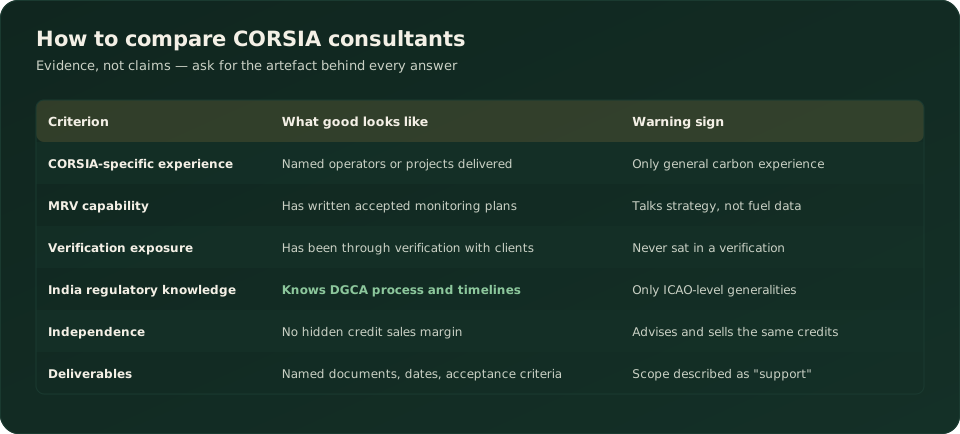
| Criterion | What good looks like | Warning sign |
|---|---|---|
| CORSIA-specific experience | Named operators or projects delivered | Only general carbon experience |
| MRV capability | Has written accepted monitoring plans | Talks strategy, not fuel data |
| Verification exposure | Has been through verification with clients | Never sat in a verification |
| India regulatory knowledge | Knows the DGCA process and timelines | Only ICAO-level generalities |
| Independence | No hidden margin on credit sales | Advises and sells the same credits |
| Deliverables | Named documents, dates, acceptance criteria | Scope described as "support" |
The independence question deserves emphasis. A firm that advises you on how many units to buy and also sells you those units has an interest in the answer. That arrangement can still work, but the margin must be disclosed and the advice separable. If neither is true, split the roles.
The India-Specific Position
Three things matter for an Indian operator or developer:
The DGCA is your national authority. Reports go to the authority, not directly to ICAO, and the DGCA publishes Civil Aviation Requirements covering CORSIA obligations for Indian operators. Confirm the current CAR and its timelines directly on the DGCA website — this is where the practical deadlines and formats live.
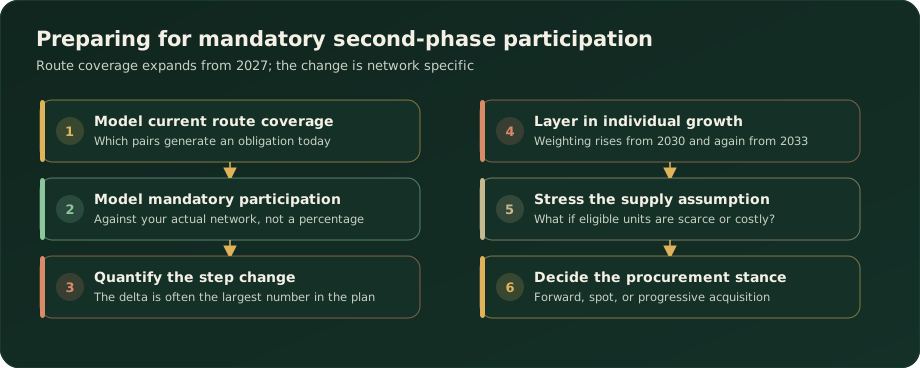
MRV obligations arrive before offsetting obligations. Indian operators above the threshold have monitoring and reporting duties now. Offsetting depends on the route-pair participation test and on the phase in force, which is a moving picture — see CORSIA phases and timeline.
India is a large potential credit supplier. Indian projects have historically been among the world's biggest sources of carbon credits, and CORSIA is one of the few compliance-grade demand sources available to them — subject to the corresponding adjustment question, which is a government decision rather than a developer one. See CORSIA consulting services in India.
Do You Actually Need a Consultant?
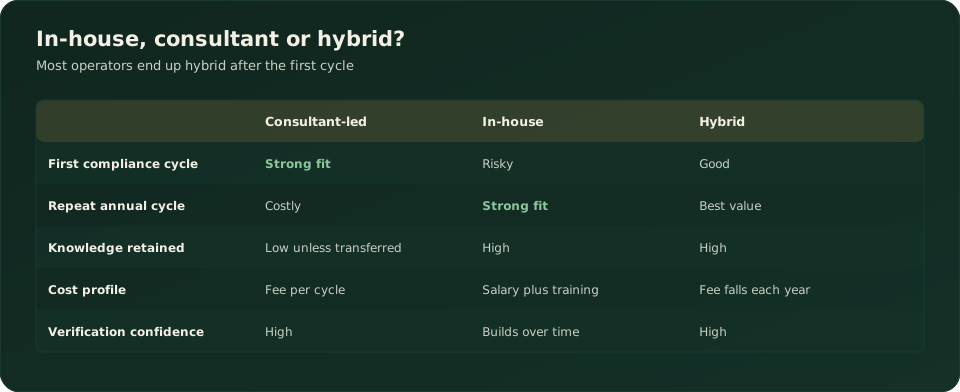
| Consultant-led | In-house | Hybrid | |
|---|---|---|---|
| First compliance cycle | Strong fit | Risky | Good |
| Repeat annual cycle | Costly | Strong fit | Best value |
| Knowledge retained | Low unless transferred | High | High |
| Cost profile | Fee per cycle | Salary plus training | Fee falls each year |
| Verification confidence | High | Builds over time | High |
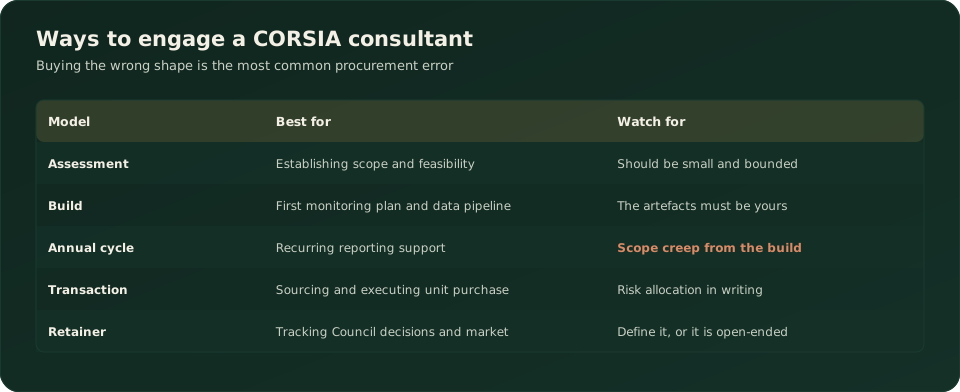
Most operators land on hybrid: external support for the first cycle and the monitoring plan, then internal ownership of the annual data work with a lighter external review before verification. Full comparison in CORSIA consultant versus an in-house team.
Before You Sign
- Confirm which practice you are buying — operator MRV, project development, or buyer diligence.
- Ask for named deliverables with dates, not a scope described as "support".
- Ask who does the work. The person in the pitch is often not the person on the engagement.
- Ask about verification. Which bodies have they worked alongside, and what findings arose?
- Ask about knowledge transfer explicitly, and get it written into the scope.
- Check independence on any credit procurement advice.
- Ask what happens if the verifier raises a material finding. Whose time closes it?
Question 7 separates firms quickly. A consultant confident in their work will tell you plainly how findings are handled and at whose cost. Our longer list is in questions to ask a CORSIA consultant, and the warning signs are in CORSIA consultant due diligence and red flags.
Frequently Asked Questions
What does a CORSIA consultant do? On the operator side, they assess applicability, write the emissions monitoring plan, build the data flow, prepare the emissions report and support independent verification. On the project side, they develop eligible projects and the documentation buyers require.
Do Indian airlines need a CORSIA consultant? Not necessarily, but most operators use external support for the first compliance cycle because the monitoring plan and data flow have to be right before any reporting begins.
How much does a CORSIA consultant cost in India? It depends overwhelmingly on the state of your fuel data, fleet size and whether it is a first or repeat cycle. See CORSIA consultant cost and fees.
Who is the CORSIA authority in India? The Directorate General of Civil Aviation. Verified emissions reports are submitted to the authority, which reports onward to ICAO.
Does CORSIA apply to domestic flights? No. CORSIA covers international flights. Domestic aviation emissions fall under national policy, which in India increasingly connects to the Carbon Credit Trading Scheme — see CORSIA versus CCTS for Indian companies.
What is the difference between MRV and offsetting obligations? MRV is the duty to monitor, report and verify emissions. Offsetting is the duty to cancel eligible units, and it applies only where both states on a route pair participate.
Can one consultant handle both airline compliance and credit supply? Some can, but the disciplines are different. Ask for evidence on the specific side you need rather than accepting general carbon market experience.
What qualifications should a CORSIA consultant have? There is no single licence. Look for demonstrated MRV delivery, familiarity with the verification process and ISO 14064-3 assurance practice, and knowledge of the ICAO documents and the DGCA requirements.
Should the consultant also sell us credits? Only with the margin disclosed and the advisory role clearly separated. Otherwise the advice on how much to buy is not independent.
When should we appoint one? Before the compliance year begins if possible. Retrofitting a monitoring plan onto a year of data already collected is the most expensive way to do this.
Need a CORSIA consultant in India? DSTechnoverse advises airlines and aircraft operators on CORSIA monitoring, reporting and verification, and works with project developers on eligible credit supply, corresponding adjustments and buyer due diligence. We are based in Indore, Madhya Pradesh and work with clients across India. See our CORSIA carbon credit services, our carbon credit portal at carboncredit.dstechnoverse.com, or talk to our team about your compliance year.
This article is general information, not legal or regulatory advice. CORSIA rules and the list of participating states change — verify the current position with ICAO and the DGCA before acting.