The instinct, when a company notices its travel emissions, is to reach for offsets. That is backwards. Offsetting is the last resort for what you could not avoid — and for most companies, a surprising amount of travel can be avoided or made lighter without hurting the business. Here is how to cut the emissions before you spend a rupee on credits.
Why Reduction Beats Offsetting
Two reasons. First, a tonne you never emit is cheaper — and more certain — than a tonne you offset with a credit whose integrity you have to verify. Second, credible frameworks like science-based targets count reductions, not offsets, toward your goal. Reducing travel improves both your footprint and your standing; offsetting only compensates.
The Reduction Levers That Work
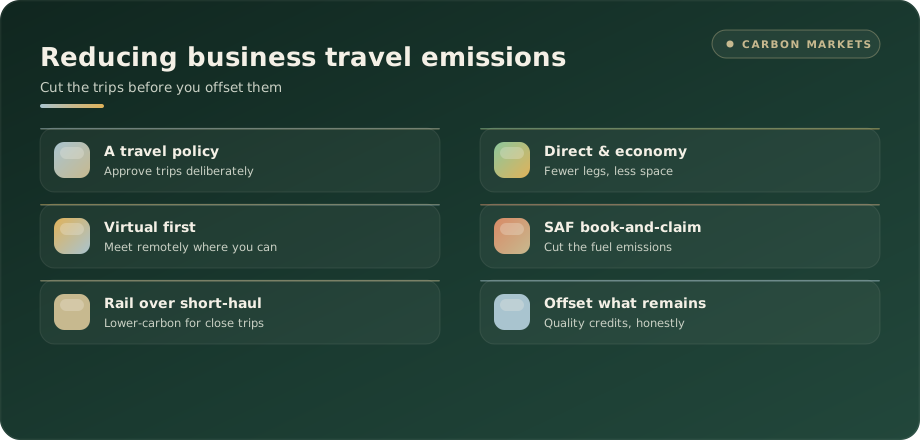
A real travel policy
The single biggest lever is a policy that makes travel a decision, not a default. Requiring a short justification for trips, and an approver, quietly eliminates a chunk of low-value travel — the conferences no one remembers, the meetings that could have been calls.
Virtual-first
Not every meeting needs a room. Making video the default for internal and early-stage external meetings, and reserving flights for the moments that genuinely benefit from being there, cuts trips without cutting results.
Rail over short-haul
On routes where rail is competitive, it is dramatically lower-carbon than flying — and often as fast door-to-door once airports are factored in. A policy nudge toward rail for short trips is an easy win.
Fly smarter when you must
For necessary flights: prefer direct routes (connections mean extra take-offs, the most fuel-intensive phase), and travel economy where appropriate (a premium seat can carry several times the emissions). These choices shrink the footprint of the travel you keep, as the flight footprint breakdown shows.
Cut the fuel emission with SAF
For flights that remain, sustainable aviation fuel via book-and-claim reduces the actual emission rather than compensating for it — a step above offsetting on the credibility ladder.
Then, and Only Then, Offset
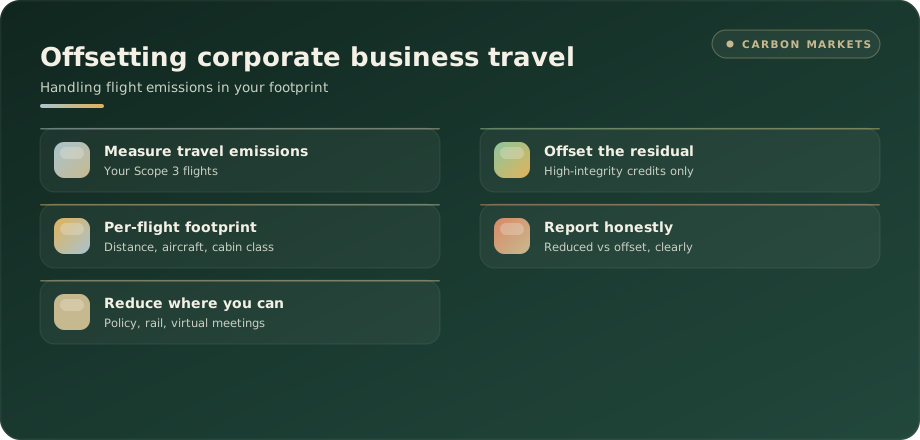
Whatever remains after all of that is the residual worth offsetting — with high-integrity credits, retired properly, and reported honestly. The point is not to avoid offsetting; it is to make sure offsets cover a genuine residual rather than papering over avoidable travel. The full buyer process is in offsetting corporate business travel.
Frequently Asked Questions
Why reduce business travel instead of offsetting it? Because avoided emissions are cheaper and more certain than offsets, and reductions — not offsets — count toward science-based targets.
What is the biggest lever to cut travel emissions? A travel policy that makes trips a deliberate, justified decision rather than an automatic choice.
Is rail really better than flying? On routes where rail is competitive, it is dramatically lower-carbon and often comparable door-to-door once airport time is included.
How does flying economy and direct help? Direct routes avoid extra fuel-intensive take-offs, and economy seats are allocated far less emissions than premium cabins.
Should we still offset after reducing? Yes — offset the genuine residual with high-integrity credits, but only after reducing and using SAF where possible.
Buying carbon credits or measuring travel and freight emissions? DSTechnoverse works on the data and integrity side of carbon — footprint measurement, project screening, registry and eligibility verification, and defensible reporting. See our CORSIA carbon credit services and data analytics. We are based in Indore, Madhya Pradesh and work across India and internationally.
Apply as a carbon credit buyer or seller
Talk to our team, or start with the complete carbon credits guide.