"Aviation carbon credits" sounds like a special category. It is not — they are ordinary carbon credits, bought to address the emissions of flying. What is worth understanding is which credit types tend to be used for aviation, and what separates a credible aviation offset from a token one. This guide is for the buyer, not the airline compliance officer.
There Is No Separate "Aviation Credit"
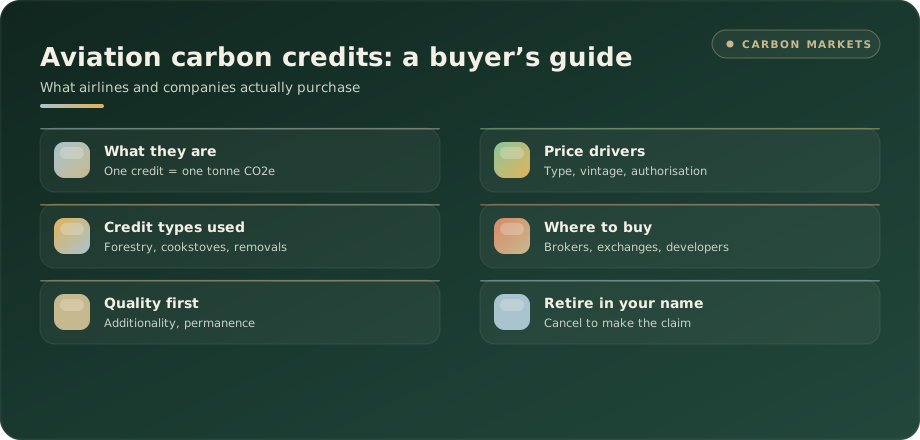
A credit does not become an "aviation credit" because of what it is; it becomes one because of what it is used for. The same forestry, cookstove or removal credit could offset a factory, a data centre or a flight. So the quality questions are the same universal ones — additionality, permanence, no double counting — applied to whatever project sits behind the credit. Do not let the "aviation" label distract from the underlying project.
The Credit Types Commonly Used
Aviation buyers — airlines under CORSIA and companies offsetting travel — tend to draw on the same project types as the wider market:
| Type | Note for aviation buyers |
|---|---|
| Forestry (REDD+, ARR) | Large volumes; check baselines and permanence |
| Clean cooking (cookstoves) | Volume with a strong development story; verify usage |
| Renewables | Cheap but weak additionality — scrutinise |
| Durable removals (biochar, DAC) | Higher integrity and price; a growing choice |
For compliance use, the type must also clear CORSIA's eligibility filter and, in the first phase, carry a corresponding adjustment.
What Makes an Aviation Offset Credible
Because aviation offsetting has drawn scrutiny — much of it from cheap, weak credits — the credible buyer applies extra care:
- Prefer higher-integrity types and, where the claim matters, durable removals over cheap avoidance.
- Check the project's integrity, not the aviation branding.
- For compliance, confirm CORSIA eligibility and authorisation.
- Retire the units and keep the evidence.
The general framework is in how to evaluate carbon offset quality.
What Drives the Price
Aviation credit prices follow the same drivers as any credit: project type, integrity, vintage, and whether it carries a corresponding adjustment — the full picture is in carbon credit prices. The aviation-specific twist is that CORSIA-eligible, adjusted units command a premium because compliance demand competes for a limited pool.
Where Aviation Buyers Purchase
The channels are the standard ones — brokers, exchanges, direct deals with developers, or advisory-supported procurement — and the process mirrors any carbon-credit purchase: define the need, run due diligence, contract, and retire. The discipline, not the "aviation" label, is what protects the buyer.
Frequently Asked Questions
What are aviation carbon credits? Ordinary carbon credits used to address the emissions of flying — there is no separate technical category; the quality depends on the underlying project.
Which carbon credits do airlines and travel buyers use? Commonly forestry, clean cooking, renewables and, increasingly, durable removals — subject to quality checks and, for CORSIA, eligibility rules.
Are aviation carbon credits high quality? They can be, but the "aviation" label says nothing about quality — you must assess the underlying project's additionality, permanence and authorisation.
Why do some aviation offsets get criticised? Because many relied on cheap, weak-additionality credits; higher-integrity types and proper due diligence avoid that.
Where can I buy aviation carbon credits? Through brokers, exchanges, project developers or advisory-supported procurement, following the standard due-diligence and retirement process.
Buying carbon credits or measuring travel and freight emissions? DSTechnoverse works on the data and integrity side of carbon — footprint measurement, project screening, registry and eligibility verification, and defensible reporting. See our CORSIA carbon credit services and data analytics. We are based in Indore, Madhya Pradesh and work across India and internationally.
Apply as a carbon credit buyer or seller
Talk to our team, or start with the complete carbon credits guide.